…we had five or six addresses for evacuation from Yarova [addresses provided by police, local organizations, and volunteers]. Four families refused to go. They said things in the area were quiet. The rest left with us. We also passed by the spot in the center of town where there used to be a post office, right next to a church. A large crowd had gathered there, and we stopped to ask for directions. On our way back to Sloviansk, we got a call that said there were a lot of dead and injured. Police told us: bring body bags and go collect the dead. We grabbed the bags in Sloviansk and drove back. By the time we got to Yarova, the military had already finished everything: all the wounded had been taken to the field hospital, all the dead to the Sloviansk morgue.
Vladyslav – Sloviansk resident, evacuation vehicle driver for the charitable foundation Breath of Hope Mission
Meduza – September 16, 2025
On September 9th reports appeared of a Russian strike on civilians near the frontlines in Donestk region. The attack would be described by commmentators as an act of ‘brutal savagery’ and ‘pure terrorism’.
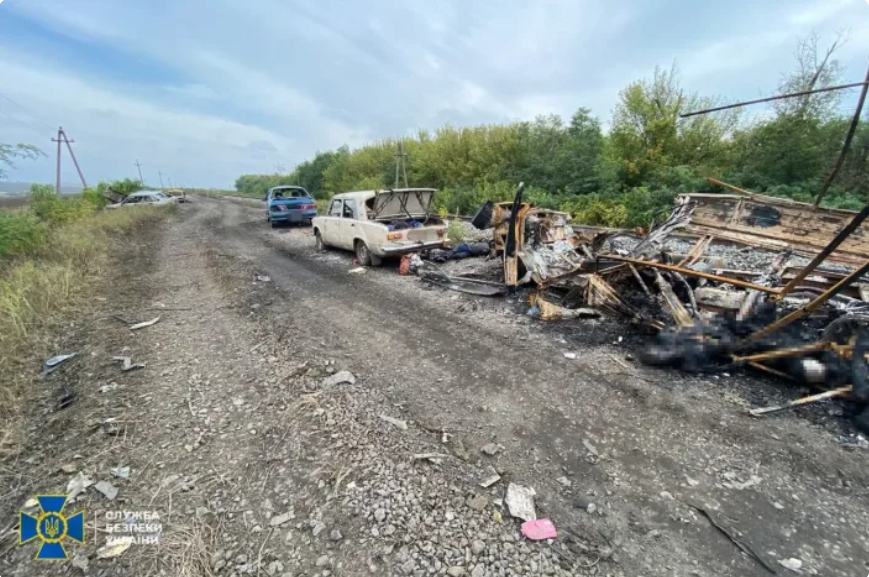
These reports followed footage and photos, posted on official and semi-official Ukrainian channels, including President Zenlenski’s, of a group of civilians evidently killed by some explosive strike. Up to 25 people were later confirmed dead, according to Ukranian sources.
The group were, it was said, queuing for their pension payments around a Ukrainian postal service van, in the rural township of Yarova. The usual post office, situated close by, was apparently out of service. The group of pensioners gathered aound the van had evidently been targeted in a precision strike, timed to horrific effect.*
The Gereral Director of the post service Ukrposhta was soon quoted as saying:
“Since the beginning of the war, we have been constantly changing security procedures, and as you can see in the video, the car stood under trees to reduce the risk of being spotted. But, apparently, someone gave away the coordinates.”
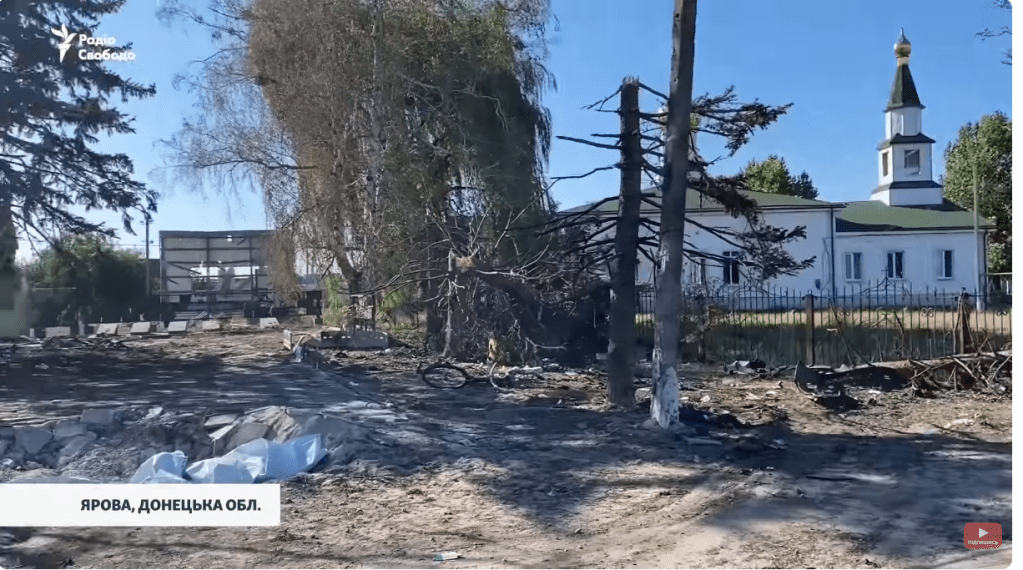
Yarova (sometimes transliterated as ‘Yarovaya’) is located in the north of the Donetsk oblast, close to the border with Karkhiv oblast. It lies between Lyman and Izium. By September 2025, it was again close to the frontline – in a sector where Russian forces had been making creeping gains. Advances that meant that Yarova was now within 10km of frontlines.
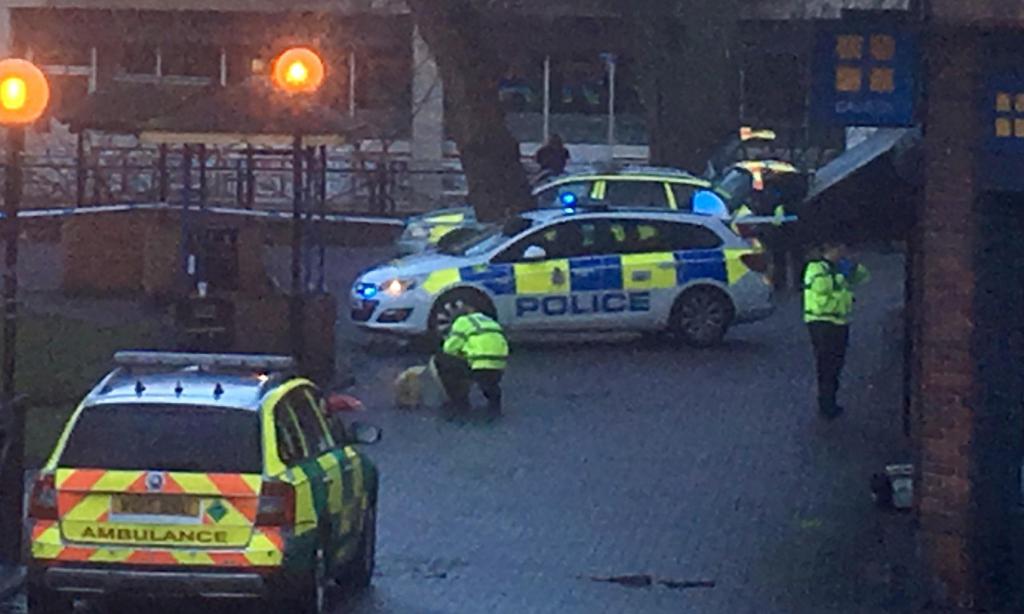
The carnage at the scene was filmed by Ukrainian military and police personnel; who were the first services responding to the strike, rather than civilian paramedics or fire fighters. According to the reports: “An investigative team, bomb disposal experts, and the White Angel special police unit have also arrived at the crime scene.”
Graphic (18+) footage uploaded to Ukrainian Telegram channel
As the strike was in a Ukrainian held area, close to the frontline, western media did not hesitate to blame the atrocity on Russia. There would be scant withholding of judgement in their reports. Even the UN website would scarcely maintain any objectivity, saying:
A Russian airstrike on a Ukrainian village in the frontline region of Donetsk on Tuesday has reportedly killed more than 20 – including many elderly civilians who were lining up to collect pension payments.
The following day, the South African government officially expressed its condemnation of Russia for this incident.
In what follows, I’ll show why this reaction in international media appears to be, at the very least, a careless rush to judgement.
Such a straightforward take on the incident overlooks the political, historical and cultural realities of this part of the territory of the former Soviet Socialist Republic of Ukraine; as well as the nature of the Ukrainian conflict -not just since February 2022 but – from early 2014.
I’ll return to this wider context shortly, after discussing the specifics of this incident and the basis for the attribution made, or rather, the lack of any such basis.
Ukrainian based media are the sources of all the images and video of the scene available online, from which to verify the claims.
These authorities stated that a Russian FAB-250 glide bomb had struck the gathering. FABs are air-dropped Soviet era dumb bombs, retrofitted with recently fashioned UPMK wing-kits and guidance units, making them highly effective and economical weapons. They are not, though, systems of the highest precision.
Lack of supporting forensic evidence
In their reports and media presentations, no forensic evidence of components or fragments consistent with a glide-bomb weapon, such as a FAB-250, were shown. And this despite the presence of technical military teams, inspecting the scene and being able to recover any such critical forensic evidence,
Having tried to review the available photos and video of the scene, there did not appear to be any obvious weapon system fragments visible.
The FAB-250 has a distinctive wing assembly. So one would expect that easily identifiable remnants of the wing-kit could be found in the vicinity of the blast.
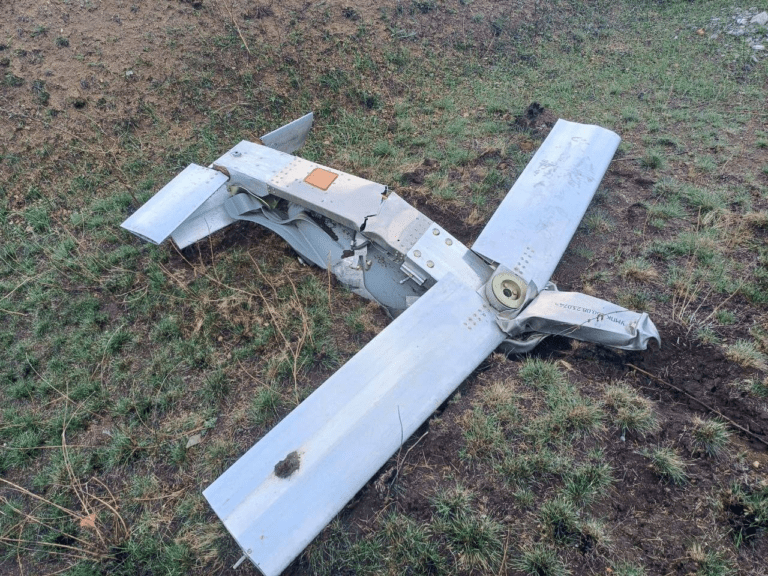
The operation of the wings and fins on glide and guided bombs produces a characteristic whistle/screech noise, as they fall. No witness testimonies mentioned hearing such a noise immediately prior to the explosion. Nor, for that matter, did any witnesses mention hearing the sound of an aircraft, or a large UAV drone, just before the blast,
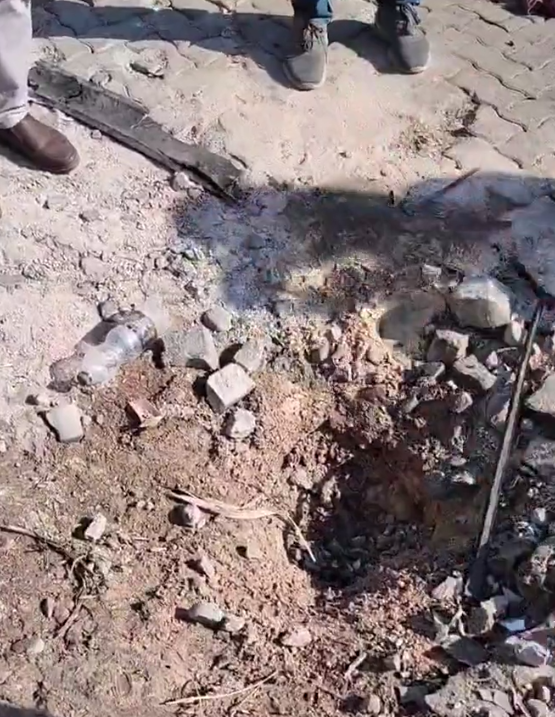
More crucially still, the modest size of the crater from the explosion is markedly inconsistent with what might be expected from a 250kg bomb (roughly equivalent to a US 500lb Mk-82), carrying 100kg TNT equivalent. That could have easily produced a crater near 2 metres deep and five metres wide.
The crater here is not more than 0.5 metres deep and betwen 1.5 and 2 metres wide. The actual level of damage seems consistent with an explosive charge of perhaps 20-30% of that contained in a FAB-250.
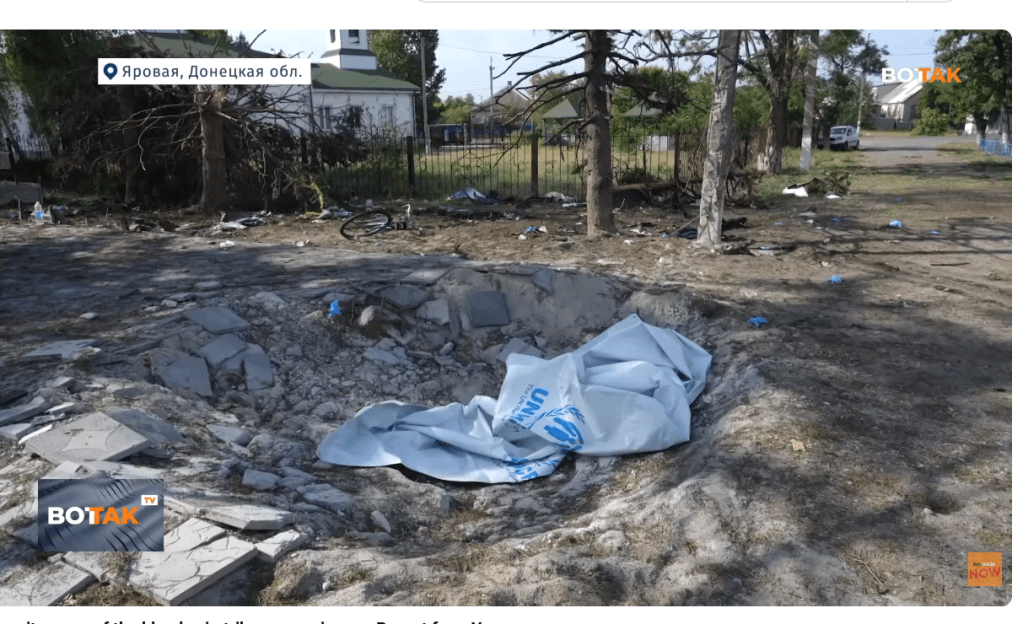
Naturally, the question arises:
Why could the Ukranians not present any fragments of the munition recovered from the debris?
And why did they point to a specific Russian ordnance that would’ve produced a much larger blast than that observed at the scene?
Perhaps you might think that these apparent faults could just be down to unfortunate confusion amongst overstrained emergency responders. But such a scenario is clearly unsustainable in light of the actual response on the ground.
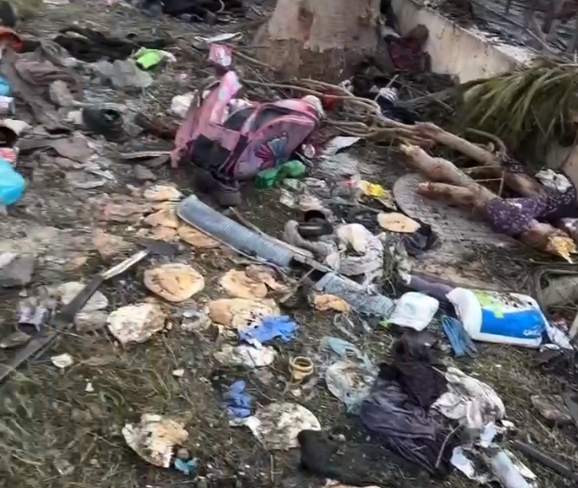
Reviewing video footage and photos posted of the aftermath: the military experts and police agency responders appeared to show little regard for the dignity of the deceased, leaving their bodies unattended and exposed. They were though, it seems, concerned to remove or conceal anything could provide critical forensic evidence about the strike.
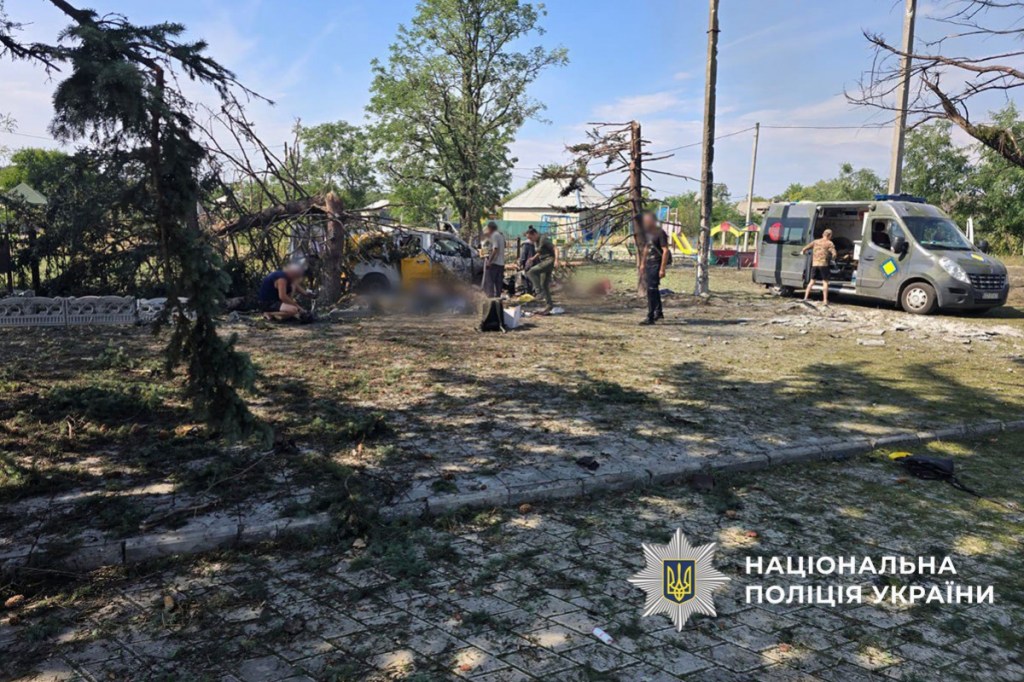
Attacks hitting civilians in crowded locations in Donbas merit due diligence.
A civil war had erupted in the Donbas following the events of the ‘EuroMaidan’. In April 2014, following mass protests, the breakway ‘Popular Republics’ of Donetsk and Lugansk proclaimed their independence. Kiev then initiated its ‘Anti-terrorist operation’ against the militias and people of the ‘separatist’ republics, who would defend their territory against Kiev’s often fanatical military.
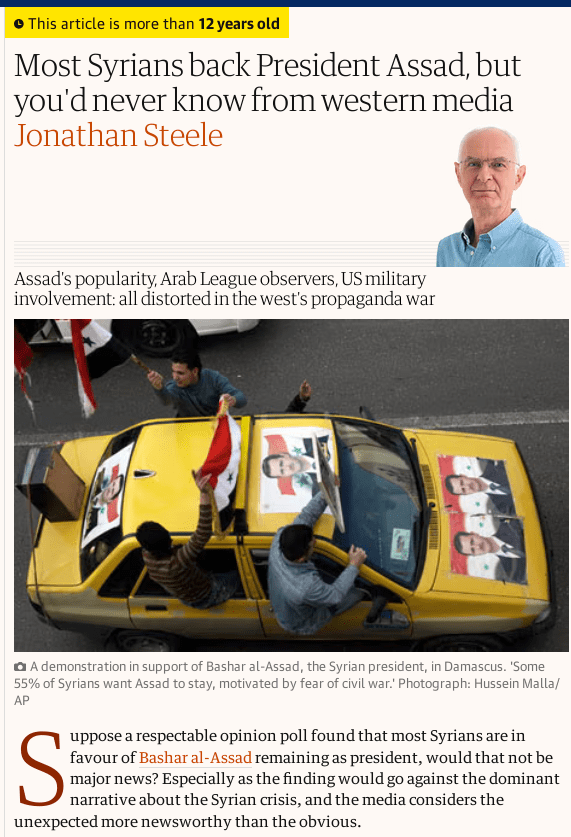
As John Pilger wrote in the Guardian near the time:
These Russian-speaking and bilingual people – a third of Ukraine’s population – have long sought a democratic federation that reflects the country’s ethnic diversity and is both autonomous of Kiev and independent of Moscow. Most are neither “separatists” nor “rebels”, as the western media calls them, but citizens who want to live securely in their homeland.
Like the ruins of Iraq and Afghanistan, Ukraine has been turned into a C.I.A. theme park – run personally by C.I.A. director John Brennan in Kiev, with dozens of “special units” from the C.I.A. and F.B.I. setting up a “security structure” that oversees savage attacks on those who opposed the February coup.
In Donetsk oblast most of the poulation are Russian speaking and more than 75% voted to secede from Ukraine in 2014. The figure was over 90% in neighbouring Lugansk. This population in the Donbas region tend to be more aligned with Russian culture, identifying more with the history of the Soviet Union, than with the revisionist histories of Ukrainian nationalists – who succeeded in inculcating virulent anti-Russian sentiments among many.
There has been considerable antipathy towards the population in the Donbas region amongst the powerful ultra-nationalist elements of the military and security state. Ordinary people here, often the older generations, may not be especially loyal to Kiev. So, in the eyes of the nationalist security and intelligence apparatus they are unworthy citizens. Perhaps having greater value to the regime as dead bodies; not least in retirement age.
A normal soldier, you might think, wouldn’t countenance killing “their own people”, but for many Ukrainian nationalists, civilians in the Donbas are not “their own”.
However, this part of the backdrop to event in Ukraine has largely airbrushed out of reporting on the conflict in western media. Coverage has often seemed to skirt over the contempt those working under Kiev’s authority have for the people of these regions.
Locals in Yarova could often be reluctant to evacuate in the face of pressure from Ukrainian ‘humanitarian’ agencies that were either police units, or working alongside them.
The apparent high accuracy of the strike, together with its timing, suggests a co-ordinated strike with the use of a precision guided munition. Use of an air delivered munition doesn’t fit with observations and testimony. A ground launched missile or rocket would then be the most plausible possibility.
What direction did the strike come from?
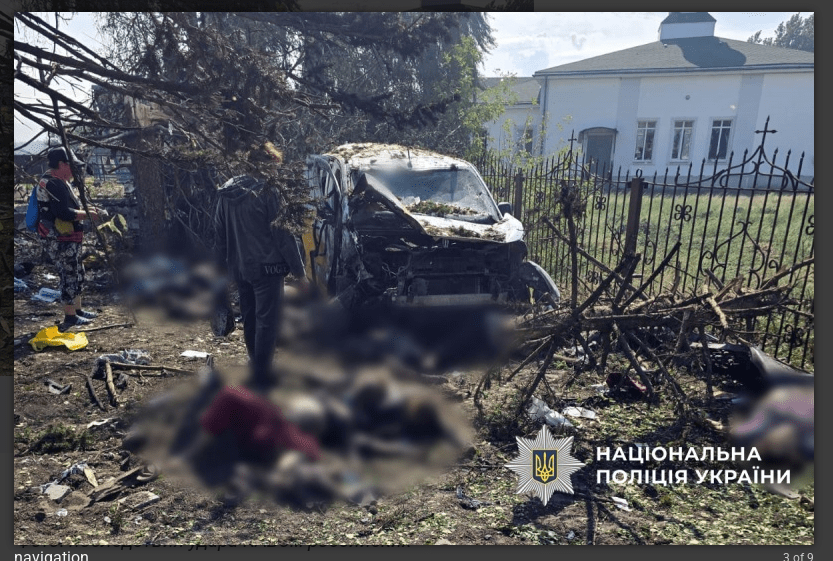
From collating imagery of the scene, together with the geolocation, it is possible to orientate photos and stills of the scene – that show the effects of the munition’s impact and the pattern of damage. Observing these effects and the properties of the crater, it is possible to infer the direction from which the munition was launched.
(right click to view full images)
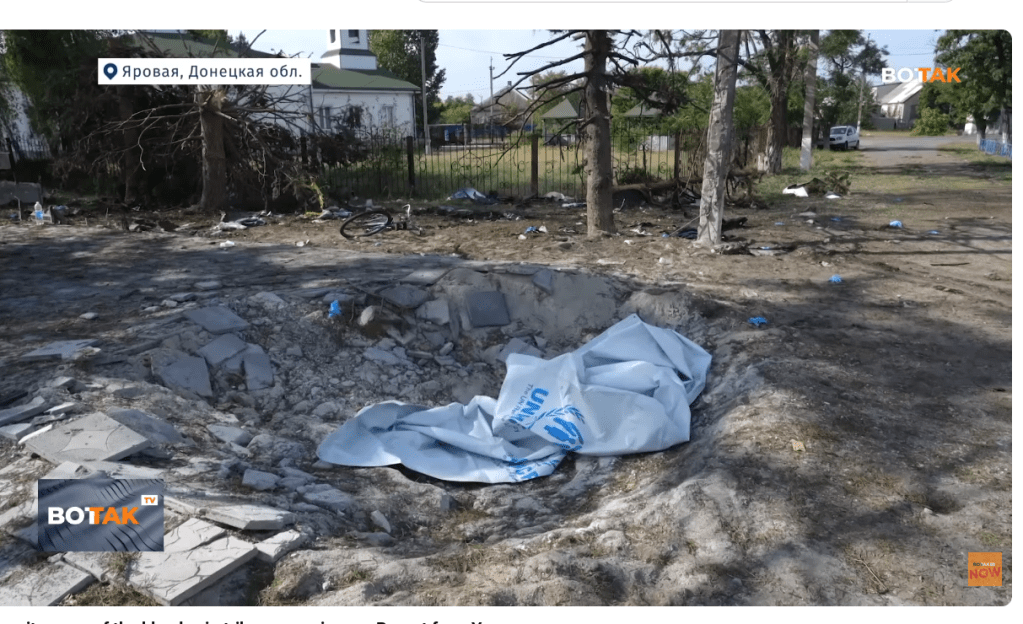
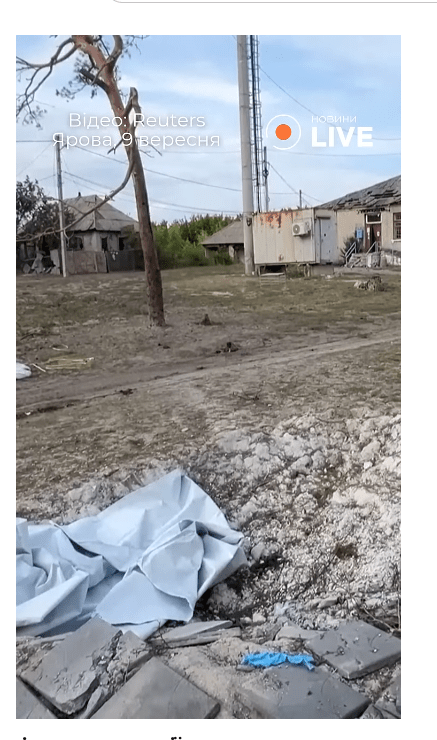
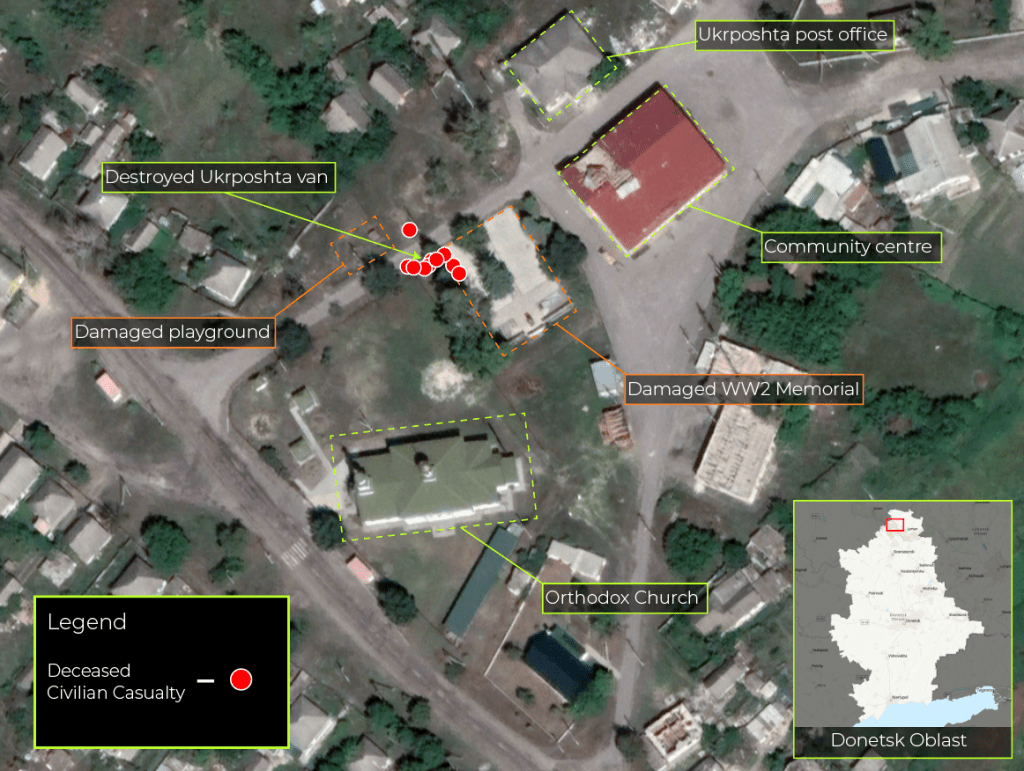
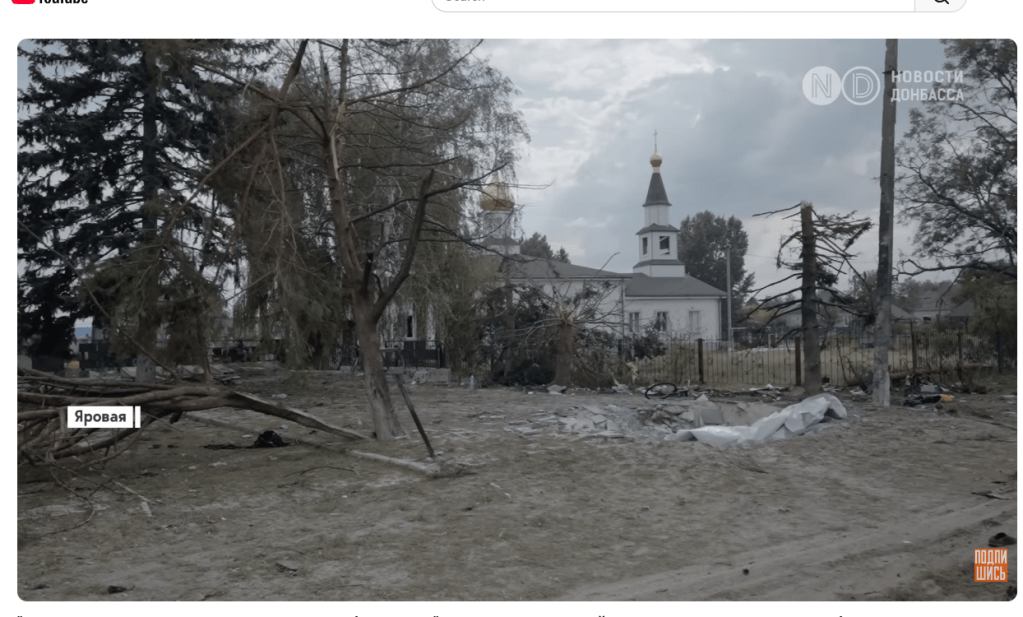
- Looking at the crater, the greatest displacement of earth and rubble – reflecting the munition’s forward inertia on impact – is on its S/SSW side suggesting the munition trajectory was from the N/NNE. The impact was on a semi-hard surface, so there is not much ejecta. But greater deformation is visible on that side.
- The way the two trees had fallen is consistent with the overall direction of the blast being on a line between them, from the point of impact.
It might be further noted that, the point of impact was close to a large radio mast (situated adjacent to the old post office building). And that this mast is approximately in line with my inferred direction.
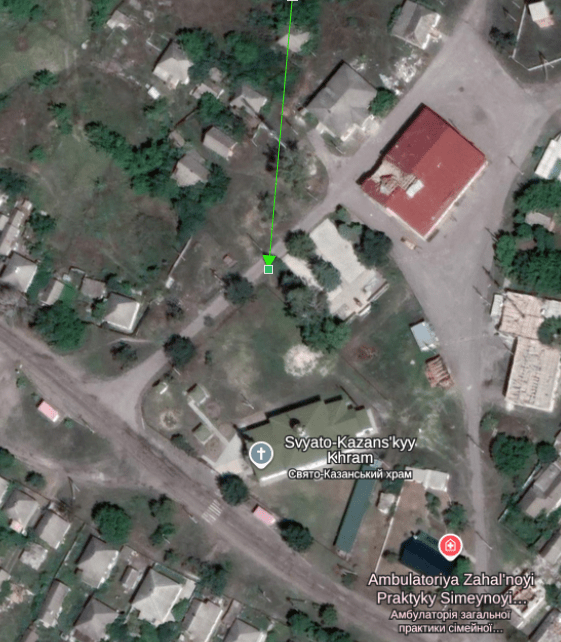
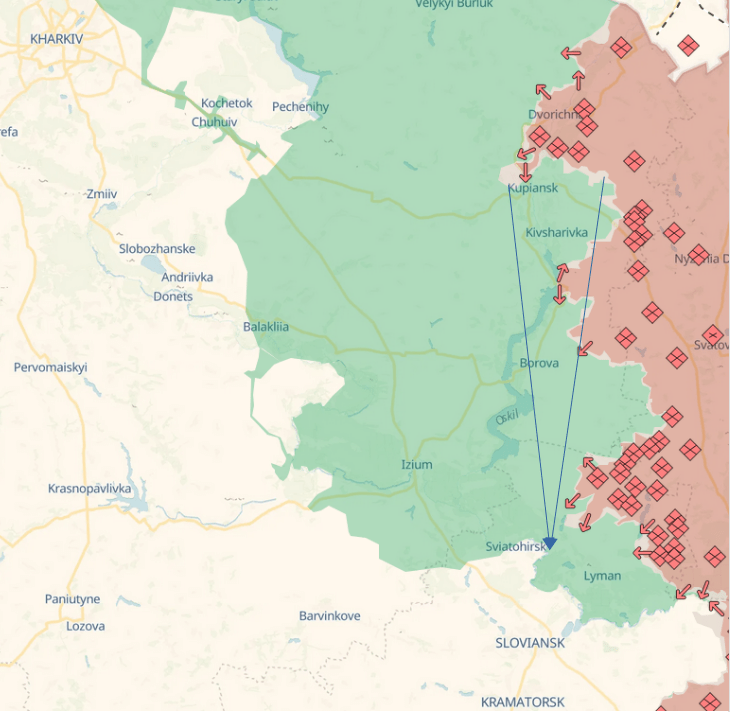
A rough indication of probable attack vectors to a 70-80k range. – the sector is largely within Ukrainian lines at the time, although close to the frontlines in the Lyman/ Kupiansk axis.
Why this incident is suspect
On August 12, 2025. The Russian Ministry of Defence put out a urgent statement saying they had intelligence Ukraine would stage an attack on civilians to incriminate the Russians in the eyes of the international community and disrupt diplomatic initiatives:
Immediately before the summit on Friday, the Ukrainian Armed Forces plan a provocative strike using drones and missiles targeting a densely populated residential area or a hospital, resulting in significant civilian casualties. This incident is intended to be immediately “documented” by the Western journalists brought in for this purpose.
As a result of the Kiev regime’s provocation, full responsibility for the strike and civilian casualties will be attributed to the Russian Armed Forces, with the aim of creating a negative media narrative and conditions to undermine Russian-American cooperation on resolving the conflict in Ukraine.
General observations of the scene, reports and circumstances are consistent with this type of co-ordinated ‘black op’ having been carried out, together with a ‘for the cameras’ narrative management focused follow-up, from the responding services. Which allowed the Ukrainian state to capitalise, in real time, on the propaganda value of images of slaughtered civilians.
Red flags are raised by:
- The lack of supporting forensic evidence for the attribution of weapon type.
- The rapid clean up of debris; carried out by military and police units rather than civilian paramedics or firefighters.
- Reports indicating recent pressured evacuations in the locale; involving “humanitarian” organisations very closely related with Ukrainian police units, if not identical.
- Uncanny coincidence – According to testimony given to Russian opposition outlet Meduza by an ‘evacuation driver’, he had stopped and asked the group waiting for their pensions for directions. And later got a call from the police instructing him to return with bodybags. Had he really stopped to share the coordinates of the location? Or send a message to confirm the group’s presence there?
- The Associated Press team later present, looked to have co-ordinated closely in their reporting with the White Angels police unit managing the emergency response; effectively disseminating their official narrative.
- Subsequent testimony on a Hungarian video podcast from a woman who said she worked at the nearby oupatient clinic in Yarova. She had noted the unusual presence of a number service vehicles in the area prior to the strike, among other concerning anomalies.
A better fitting scenario
As discussed, use of a precision ground launched weapon is implied by examination of the scene and testimony.
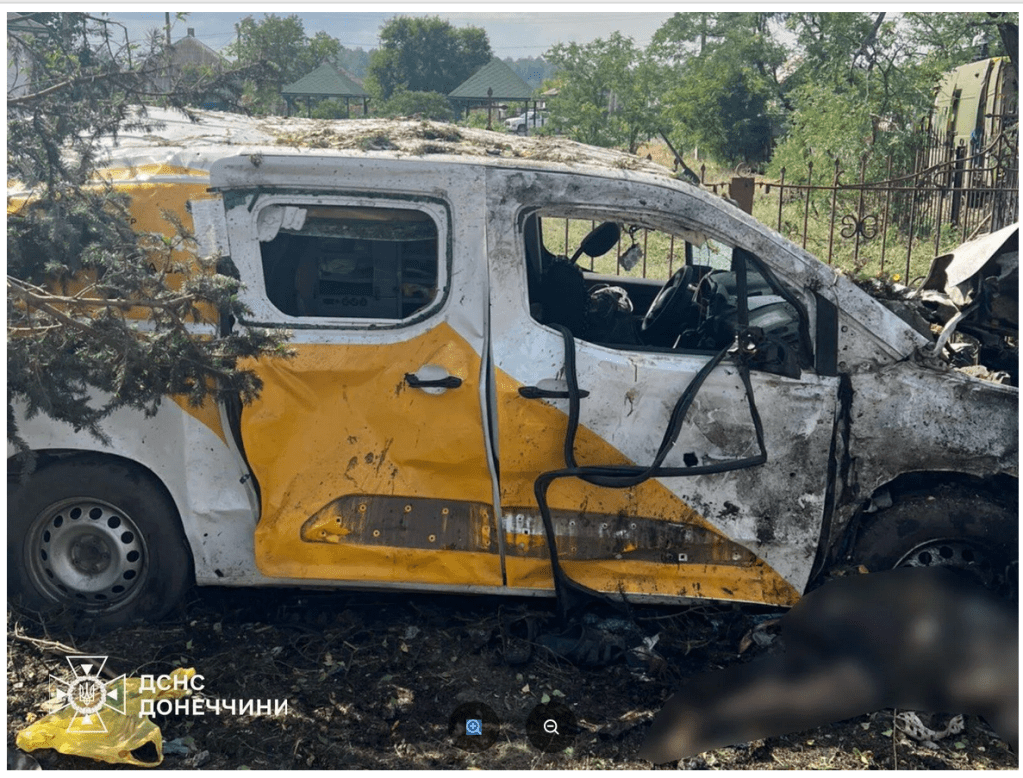
In photos of the aftermath there is no discernible sign of the warhead having contained fragmentation elements. The side of the van exposed to the blast would likely show multiple punchholes from such anti-personnel elements. So, it appears that a unitary high explosive warhead was deployed for this strike.
One such rocket capable of precision strikes is the M31. These have been in service for Ukraine, since the summer of 2022, in tandem with HIMARS or M270 GLMRS universal launch systems. HIMARS launchers have been provided by US. And the UK sent 6 M270s in early summer of 2022 and provided training on the use of the systems on Salisbury Plain. France sent two M270 launchers also.
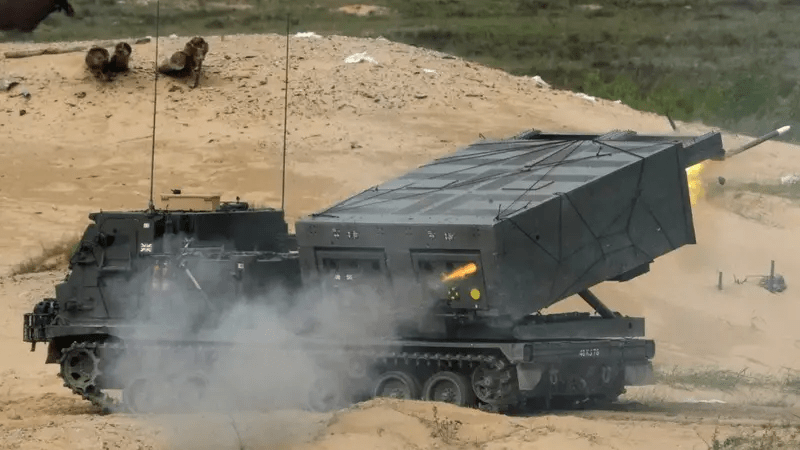
They are consider to be systems of ‘extremely high accuracy’. Sometimes called the ’70km sniper’, it has been employed by Ukraine specifically for precision strikes. Their maximum range is around 90km. However, the target must be at least 15km from the launcher.
Typically, for a strike on a point taget a unitary warhead is preferred. And this is the type of warhead M31s are fitted with – containing 51lbs of PBX-109 high explosive, equivalent to between 61 and 74lbs of TNT.
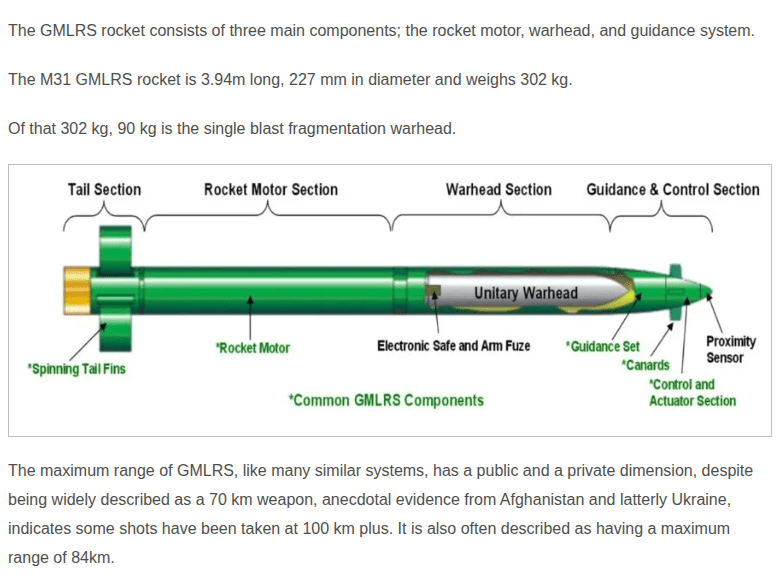
The M31A1s are said to work with EW-jamming proof GPS and Ineritial navigation; meaning they are reliable weapons in this densely contest battle-space. The Russians don’t rely on GPS, having differently based systems.
While no munition fragments from the scene were publicly documented and only circumstantial evidence is available, a M31 rocket looks to fit well; with the size of the crater and level of damage. And it is documented to be operated on the frontlines of this war.
It appears then that this atrocity was made possible by NATO countries provision of Himars or M270 launchers with M31A1 rockets to the Ukraiines military.
An article for Britain’s most prestigous militarty thinktank, about the capabilities afforded by MLRS systems sent to Ukraine noted that the UAF employ a range of targettig methods for strikes. Including “the use of mobile phone software that enables Ukrainian citizens to report the location of Russian troops using an app.”
Since February 2022, Ukraine in conjunction with its mobile network providers has developed what can be called a “crowd sourced kill-chain“.
Specifically, the Ukrainian army has setup multiple formal methods in which that people could report the positions of Russian forces, these include a Telegram channel, a website and even an app called Bachu that uploads details once data connectivity has been re-established…This “kill-chain crowd-sourcing” … has probably been the first time that civilian input into military operations and what to target has been automated to such a degree. No doubt there have also been a myriad of informal ways that enemy positions have been communicated to Ukrainian commanders through sending of pictures or reports via Voice, SMS or messaging.
Perhaps then, someone involved in this treacherous ploy made use of a mobile application to finalise the arrangement, shortly before the pensioners’ lives were extinguished.
Means, motive and opportunity
The above shows that Ukrainian agencies had:
- the means to carry out this strike – with a M270 or Himars launcher.
- a motive to carry out a strike – in order to further demonise their enemy, at a time when it was commencing negotions with Ukraine’s most important backer, the US.
- the opportunity to manipulate and control the behaviour of local people. And pass live information from ‘civilians’ to military commanders. While Ukrainian reporters could be expected to accept and disseminate the desired narrative, both in Ukrainian media, and internationally through Associated Press.
The Ukrainians probably also understood that the western media would not be much concerned to distance itself from their claims for the sake of objectivity, much less question or critically examine the facts. As this is has been a consistent pattern in its coverage of atrocities in Ukraine.
The above is my write up of prior work examining and analysing sources openly compiled on acloserlookonsyria
Additions or updates may be made.
* Some witness later mentioned one or two other blasts, but available photos and video footage show only one crater at the scene where the causalties were reported. Much of the reported testimony was unclear and sometimes plainly exaggerated.