“The information age is actually a media age.” And living in it may demand some degree of ‘ironic detachment’ – or the ability to hold two opposing viewpoints while remaining fully functional (as Scott Fitzgerald might’ve said).
That is, at least, if one has been paying any attention. Many prefer to look the other way. This blog isn’t for them.
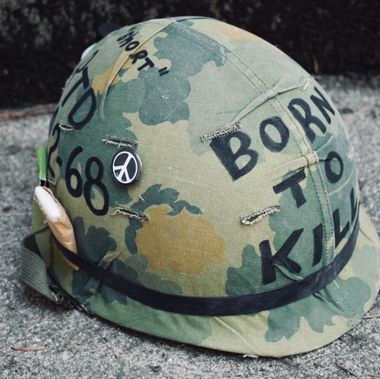
Colonel: The what?
Joker : The duality of man. The Jungian thing, sir.
I once intended to write here on the theme of cognitive dissonance. But this blog now hosts some results of my open source investigations – on war crimes, geo-politically contentious incidents and trends, and aims to explore the role of foreign policy and propaganda in perpetuating conflict.
I’ve worked collaboratively with and learnt from notable independent investigators on the research wiki A Closer Look on Syria, under the quickly chosen screen name ‘Diagonal’ since 2018. Where my first contributions demonstrated the confected nature of the British government’s ‘Novichok’ allegations against Russia.
Recommended pieces:
HOW THE MEDIA PROMOTES THE LIES LEADING US TO CATASTROPHIC WAR – JOHN PILGER
The information age is actually a media age. We have war by media; censorship by media; demonology by media; retribution by media; diversion by media – a surreal assembly line of obedient clichés and false assumptions.
Why propaganda works – Caitlin Johnson
Modern psychology tells us that people don’t just tend to hold onto their propaganda-induced belief systems; people tend to hold onto any belief system. Belief perseverance, as the name suggests, describes the way people tend to cling to their beliefs even when presented with evidence disproving them. The theory goes that back when most humans lived in tribes that were often hostile to each other, our tribal cohesion and knowing who we can trust mattered more to our survival than taking the time to figure out what’s objectively true.
Propaganda’s casualties – Cara Marianna
…we are left with “pseudo-relationships” in which we cannot speak freely or honestly with those who are closest to us. Instead, we must hide our innermost selves lest we lose the relationship. As a consequence, dissident voices are intentionally silenced when speaking up for the truth risks the destruction of close family ties and friendships, not to mention careers. For most people, the safety of conformity is preferable, even if unconsciously, to the threat of being ostracized by other people.
Propaganda in the Interpretations and Representations of the Gaza War – Greg Simons
Propaganda attempts to engineer public perception in order to manufacture their consent for something that goes fundamentally against interests and the human spirit (moral/ethical dimensions). Therefore, it must resonate with audiences by emotionally priming and mobilising them via an overly simplistic representation of the armed conflict
THE SCIENCE OF ANTI-RUSSIAN PROPAGANDA – GLENN DIESEN
Stereotypes are used to mask reason and reality, such as the humanity of the adversary. Propaganda entails appealing to the best in human nature to convince the audience to do the worst in human nature.
