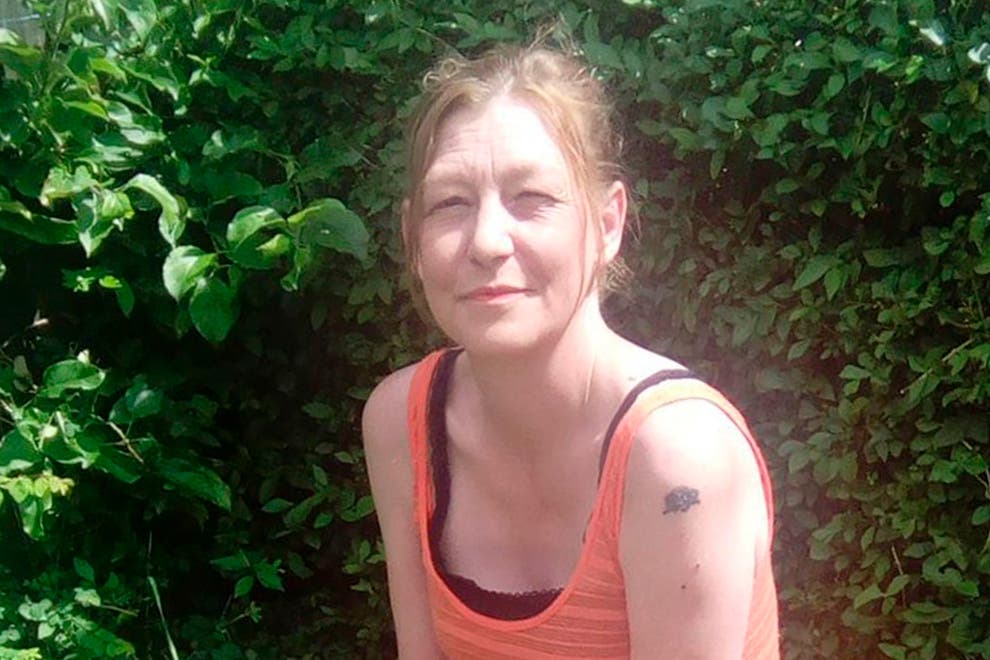
The ‘Public Inquiry’ in to the death of Dawn Sturgess resumed on March 24. After preliminaries its timeline has again been set back substantially. Press commentary acknowledges this is ‘exceptional‘. The need for further delay is said to arise from the risk of ‘top secret’ information posing a threat to ‘national security’ being inadvertently disclosed in the many relevant documents.
The process clearly isn’t independent, nor is it public, nor is there much inquiry. Let’s examine some facts pertinent to the case to see why that would be.
According to reports, on the morning of Saturday 30th June 2018 around 10.15am emergency services were called to a flat in Muggleton Road, Amesbury. A 44 year-old woman named Dawn Sturgess was taken to hospital. Later that afternoon emergency services attended once again, in greater numbers. A man was taken to hospital. According to later reports, it was her partner Charlie Rowley whose flat it was.
That evening a reporter for Salisbury based local radio station SpireFM reported on its website, that emergency services had been called to deal with a drug related incident with one person being taken to hospital.
Emergency vehicles attended a drug related medical incident on Saturday evening (June 30) – Faye Tryhorn, Spire FM, June 30, 2018 – Updated July 2 (Page grabbed here)
“Police have told us they are ‘certain there’s no risk to the public’ following the drug-related incident.“
After the high profile events surrounding the hospitalisation of Sergei and Yulia Skripal in March, there had seemingly been some concern about dangerous materials. A unit from Swindon Fire attended the second incident at the flat with their decontamination equipment. Locals saw personnel in green Hazmat suits. The next morning on their twitter account Swindon Fire stated, “thankfully the incident wasn’t serious and our decontamination shower wasn’t required.”

(Source)
Two days later (2nd July) Wiltshire Police issued an urgent warning to local drug users about a batch of contaminated drugs in circulation in South Wiltshire. It said two people had been found unconscious at the flat over the weekend after using from the batch. The statement asked for information from anybody who might know anything about how the batch came into circulation. But it also assured that there was nothing to suggest any wider risk to the public.
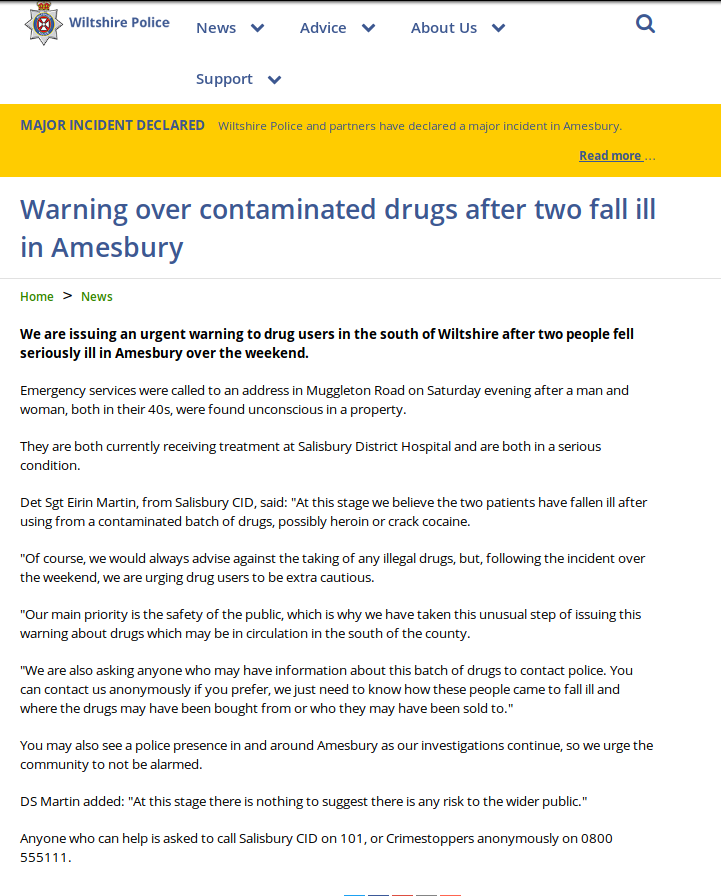
Evidence from Police records indicated that Dawn Sturgess suffered a cardiac arrest after taking contaminated heroin. The local Criminal Investigations Department (CID) had investigated and found that the flat had been taken over (or ‘cuckoo’d’) by a group of local drug users and dealers. There had apparently been a party of sorts on the Friday night before. Conceivably, Charlie Rowley may have used from the batch later on Saturday, without fully realising the danger.
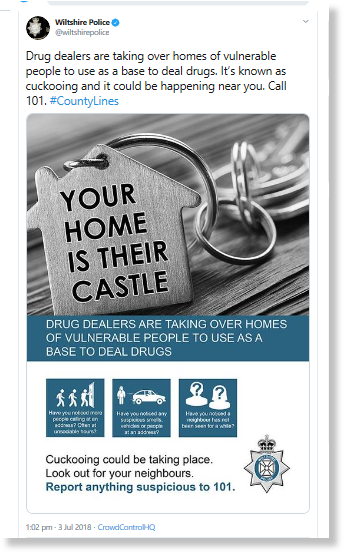
On 3rd July Wiltshire Police issued a further warning about ‘cuckooing’ of vulnerable people’s accommodation by drug dealers.
That such information pertaining to the incident not enter the wider public domain is, it seems, now considered a matter of the ‘utmost importance’ for “national security”.
How did these tragic, but not altogether uncommon, details of a vulnerable person apparently succumbing to the ill effects of drug consumption, become something the British establishment views as ‘extremely sensitive’ and a threat to the country’s “standing” with international partners?
On the morning of the 4thJuly London media announced that the pair had been poisoned by a ‘novichok nerve agent’. The case was now being linked, in the media worldwide, with the Government’s claims about the poisoning of Sergei and Yulia Skripal in March. This time the story ran against the backdrop of the Football World Cup being hosted in Russia and a summit between the Russian and US Presidents.

By the evening, ‘Counter Terrorism Police’ from the MET (Metropolitan Police) had taken over control of the incident’s management from Wiltshire Police. ‘ Counter Terrorism’ (previously ‘Special Branch’) fall under political and security agency control. Statements from the local council, Fire, and WIltshire Police referred obscurely to coordinating with ‘multi-partner agencies’. These agencies being left unnamed. Later the Defence Science and Technology Laboratory at nearby Porton Down was reported as confirming the pair had been exposed to Novichok.

On the 7th of July the Daily Mail reported:
EXCLUSIVE: Mother of Novichok victim says her ‘lost soul’ daughter is being deprived the care given to the Skripals because she’s a ‘nobody alcoholic’ who turned to drink battling post-natal depression Daily Mail, July 7, 2018 (Archived)
..She also slammed the police for ‘keeping the family in the dark’ by saying that Dawn had suffered a heart attack for several days before the truth came out.

The article also said family members were accustomed to her being treated in hospital as a result of her substance use issues. The family member interviewed also said that she “trusted people too easily”.
On 8th July Dawn Sturgess’s life support machine was turned off. Some comments in the media from the period indicated that the family believed she had effectively died in the flat. Normally a postmortem would take place on the day following the death, but officials in London intervened to delay it and put another coroner in charge.
The motive for the opportunistic hijacking of these unfortunate events and Dawn’s medical status clearly seems to have been to bolster the government’s faltering Novichok narrative. Which had been weaponized against Russia in the international arena after the hospitalisation of the Skripals in March. Claims that a highly lethal Russian nerve agent was used in Salisbury to attack Sergei and Yulia, resulted in some perplexity and derision after none of those said to be affected died.
The delayed postmortem took place on the 17th when a visiting team from the OPCW was allowed to attend. Strangely, its findings were not signed off until four months after the procedure.
…cause of death “Ia post cardiac arrest hypoxic brain injury and intracerebral haemorrhage; Ib Novichok toxicity”.
These findings became public during a previous sitting of the Coroner’s Inquest in London. Medical experts were approached for comment by John Helmer. They..
..believe the record of cardiac arrest leading to brain death is proof that Novichok toxicity was not (repeat not) the cause of Sturgess’s death. According to one of these experts, sumarising his colleagues’ assessments, “Novichok leads to low acetylcholine esterase levels, and the victim essentially drowns, i.e. lungs fill with fluid. Lung fluid would have been detected in the first PM, unless the experts at Salisbury drained the lungs as part of their treatment.” Another expert on organophosphate poisoning, who works in hospital emergency wards, says that nerve agents cause paralysis of the lungs, so asphyxia is the usually given as the cause of death. He too expresses surprise at the report of cardiac arrest.
Opioid overdoses can lead to cardiac arrest with such brain injuries, according to medical texts.
In the days after the relaunched ‘Novichok’ story went out on the wires, Police “working with with partner agencies” were said to be looking for the source of the poisoning. On Friday, July 13th the MET announced that on July 11th they had found the ‘Novichok container’. This was 12 days after Wiltshire Police had first attended the flat.
The narrative for public consumption would be that: assassins from Russian Military Intelligence had, after smearing Sergei Skripal’s front door with the military grade nerve agent, discarded the container, a Nina Ricci ‘Premier Jour’ perfume bottle, in a charity bin. Somehow Charlie Rowley found it, nearly four months later, whilst rummaging through. Three days later when Dawn tried the perfume on, she unwittingly sprayed a highly deadly Russian chemical weapon on herself. Many months later, official sources acknowledged that finding such a bottle in a regularly emptied charity bin was implausible. But this is what was depicted in the BBC’s drama “The Salisbury Poisonings”.
The Police information management procedure running ahead of the ‘public inquiry’ is coordinated by the MET’s SO15 and Thames Valley Police and is called ‘Operation Verbasco.’ Wiltshire Police play a subordinate role in adhering to its process. According to Verbasco’s submissions to the inquiry:
The nature and extent of the national security concerns which arise in the context of this Inquiry necessitate extensive and carefully developed security arrangements. These arrangements come at a significant time-cost and expense, and maintaining the security of sensitive material which is required in the environs of the OPEN hearings will not be without its challenges…
The forces have needed to recruit staff specifically to filter documents about the incident to “avoid any inadvertent disclosure of sensitive material.” A Police submission to the inquiry mentions that apparently innocuous materials may when placed together pose national security concerns. The preparation of documents for the enquiry requires:
“…liaison with each of the “equity holders” within policing, so as to ensure that the scope of the application accurately reflects the underlying sensitivities. This is necessarily a time-consuming process, requiring extensive and detailed input from senior officers across various forces and commands.”
As Helmer reported, “court papers also reveal that the official records now under review of the Novichok investigations have “emanated from the Home Office; the Cabinet Office; the Foreign, Commonwealth and Development Office, the Ministry of Defence, the Department for Environment, Food, and Rural Affairs, Public Health England, the Department of Health and Social Care and the Government Office for Science.“
The legally required coroner’s proceedings; have been repeatedly delayed, had their legal format changed to enable secrecy, only to be delayed again. Aside from the considerable public expense and waste of man hours, the British State appears to have:
- Rail-roaded the work of Wiltshire Police, placing its officers and other emergency service personnel, who dealt with the initial incidents and their investigation, in an invidious position.
- Deceived Sturgess’ family and manipulated their emotions, whilst coaching them on the official story for media appearances.
- Betrayed the trust of the British public and world at large with the aim of traducing the international standing of a foreign government. The ‘Novichok’ media sensation was used to instigate a round of diplomatic measures against Russia by Western and European governments.
- Caused both alarm and inconvenience to local residents. The building on Muggleton Rd was gratuitously demolished, on the pretext it was contaminated. No one else who went in there ever required medical treatment.
- Pressured media outlets to scrub from the web earlier reports on the incident that did not fit the official narrative.
Details of a drug related incident and death clearly do not pose any threat to ‘national security’. Rather the threat to the authorities is of shame, embarrassment and loss of credibility, in the event of this rather sinister and yet poorly conceived psychological operation being widely exposed.
I don’t think the implications for the tenability of the UK’s and NATO’s accounts of other “Novichok poisonings” need be spelt out here.
More sources and details can found at the pages on A Closer Look on Syria
UPDATE – October 20, 2024
One of the documents submitted to the enquiry by Wiltshire Police; a witness statement taken two days after the incident from one of Charlie Rowley’s friends who was with them that weekend, indicates that Dawn’s collapse may have been due to her taking prescribed Zopiclone tablets (sedatives used to aid sleep).
Overdose of Z-drugs will result in depression of the central nervous system. The effects of any misuse will likely be exacerbated by alcohol consumption. In any event the combination of Zopiclone and opioids is strongly advised against.
The witness statements also suggest, although sketchily, that Dawn may have been taking the antipsychotic quietiapine – as she had recently been diagnosed as ‘bipolar’. Quietiapine also has sedative effects. Moreover its use is strongly correlated with adverse cardiac events.
Dawn was found by the paramedic not breathing and without a pulse. Recent media reports that Dawn Sturgess was blue when found by the paramedic are likely due to her applying blue hair dye when she collapsed – as described in the witness statement.
The statements emphasised that Dawn was not an active heroin user, although was an ‘alcoholic’.
But the witness statements do say that Charlie Rowley did subsequently take heroin that day after Dawn was taken to hospital. Unusual symptoms that Charlie Rowley is reported as presenting with later on, were I suspect, rapid withdrawal symptoms. Which as I outlined here significantly overlap with typical symptoms indicating nerve agent exposure.


One response to “‘Russian chemical weapons’ – English drug users: The work of British Intelligence”
[…] unit checked and tested the apartment after Sturgess’s and Rowley’s hospitalisation, read this. […]
LikeLike